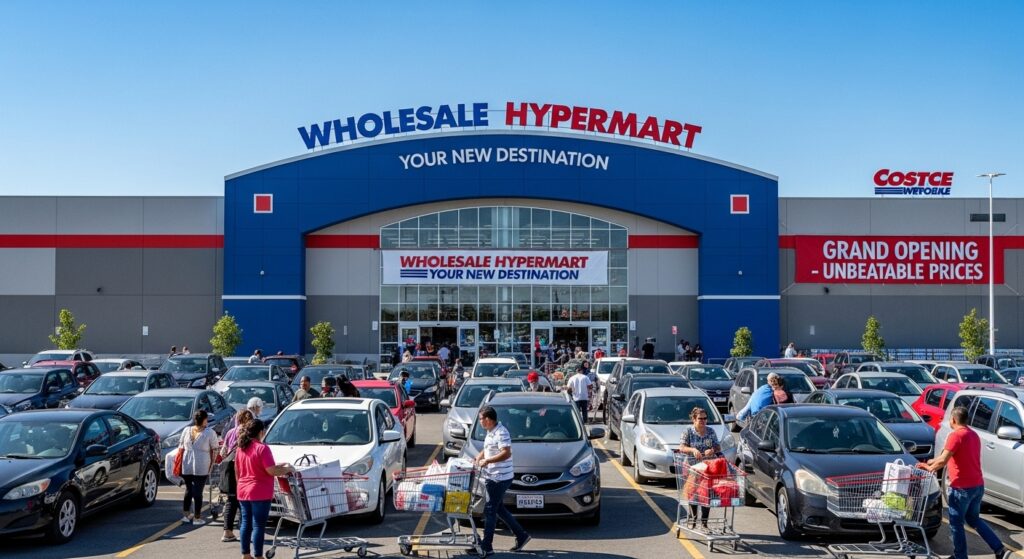
In a major development for the retail industry, a new Costco rival has launched a megastore, shaking up the wholesale club landscape and offering shoppers an expanded choice when it comes to bulk shopping and value pricing. This new competitor enters a sector long dominated by warehouse club giants, promising fresh competition, innovative features, and compelling pricing strategies designed to attract value‑minded consumers.
The launch of this megastore signals a shift in how consumers shop for groceries, household goods, electronics, and other essentials—especially at a time when inflation and economic uncertainty are driving people to seek greater savings.
The Rise of Wholesale Retail Competition
For decades, wholesale clubs have appealed to customers who want to buy in bulk at lower per‑unit costs. Costco, Sam’s Club, and BJ’s Wholesale Club have been the most recognized names in the sector. Each has cultivated loyal memberships by offering a mix of general merchandise, food and grocery items, electronics, furniture, and private‑label brands.
The entry of a new megastore directly challenging these incumbents reflects several broader trends:
- Consumers seeking greater value and selection
- Increased demand for bulk and discounted goods
- Growth of one‑stop shopping experiences
- Retailers innovating to capture consumer attention
The new megastore’s launch represents an attempt to take advantage of these trends by offering a modern retail experience combined with competitive pricing, a broad product assortment, and customer‑centric services.
What Sets the New Megastore Apart
While details vary based on the specific retailer behind the launch, several features commonly distinguish this new megastore from traditional warehouse clubs:
1. Expanded Product Assortment
Beyond typical bulk groceries and household items, the new megastore includes a wider range of premium goods such as:
- Branded fashion and accessories
- Health and wellness products
- High‑end electronics and appliances
- Specialty foods and gourmet items
This broader assortment aims to attract shoppers who want both value and variety under one roof.
2. Flexible Membership Models
Unlike some competitors that require a single membership tier, the new rival offers tiered membership options designed to appeal to different shopper needs, including:
- Standard access for casual buyers
- Premium membership with added discounts
- Digital‑only plans focused on online shoppers
This flexibility helps the retailer reach a broader audience and reduce barriers to entry.
3. Technology‑Driven Shopping Experience
To appeal to modern consumers, the megastore integrates digital tools such as:
- Mobile apps with personalized offers
- Contactless checkout and self‑checkout kiosks
- Online ordering with curbside pickup and delivery
- Enhanced in‑store navigation
Technology helps streamline the shopping experience and meets the growing expectations for convenience and speed.
4. Competitive Pricing Strategies
Price remains a core driver of wholesale club loyalty. The new megastore is positioning itself with aggressive pricing on staples and high‑volume products, often matching or undercutting competitors to attract value‑focused shoppers.
By combining competitive prices with high‑quality product offerings, the retailer aims to win market share rapidly.
Impact on the Retail Industry
The launch of a megastore competing directly with established wholesale clubs is expected to have several impacts:
Increased Competition
Competition generally benefits consumers by forcing incumbents to improve offerings, adjust pricing, and innovate. Costco and other established players may respond with:
- Enhanced member perks
- Expanded product lines
- Price adjustments
- Improved digital services
This rivalry could lead to better value and more choices for shoppers.
Supply Chain Optimization
To maintain competitive pricing, the new megastore and its competitors will focus on supply chain efficiency. Faster inventory turnover, improved logistics, and stronger supplier relationships will become even more critical.
Retailers that optimize these areas can deliver low prices while maintaining profitability.
Expanded Services
Wholesale clubs may invest more in value‑added services such as:
- Pharmacy and optical services
- Travel and insurance benefits
- Home delivery and fulfillment options
- Expanded private‑label products
These enhancements can help create stronger membership loyalty as competition intensifies.
What Shoppers Can Expect
Shoppers visiting the new megastore can expect:
- Large‑format aisles with bulk items and premium selections
- Competitive prices on everyday essentials
- Technology support for modern shopping habits
- A variety of membership options suited to individual needs
The store’s layout and product curation are designed to balance value, convenience, and quality—appealing to families, small businesses, and frequent bulk buyers alike.
Potential Challenges Ahead
Despite strong promise, the new mega‑retailer will face several challenges:
Leasing and Real Estate Costs
Operating a large store format requires significant real estate investment. Securing strategic locations while keeping costs manageable will be crucial.
Building Membership Base
Wholesale clubs rely on recurring membership revenue. Convincing shoppers to join and renew memberships will require strong value propositions and differentiated benefits.
Competitor Responses
Incumbents may leverage their scale, brand loyalty, and supplier contracts to defend market share aggressively. The new entrant must continue innovating to stay relevant.
A Turning Point for Wholesale Clubs
The introduction of a new wholesale megastore signals a turning point in the retail landscape. As consumer expectations evolve, so do the strategies companies use to meet those needs.
For shoppers, this means more choice, potential cost savings, and a broader range of product offerings. For the industry, this represents a new phase of innovation, competition, and differentiation.
Conclusion
The launch of a Costco rival’s megastore in late 2025 marks a significant moment in wholesale retail. By combining competitive pricing, expanded product offerings, membership flexibility, and technology‑driven experiences, the new retailer aims to disrupt a market long dominated by established players.
As competition intensifies, consumers stand to benefit from improved services, better pricing, and new shopping experiences. While challenges remain, the emergence of this new megastore underscores the dynamic nature of the retail industry and the ongoing evolution of how people shop for bulk goods in a value‑focused era.
Whether this new competitor reshapes the wholesale club landscape will become clearer in the years ahead, but the arrival of a fresh challenger already signals exciting times for retail innovation.