
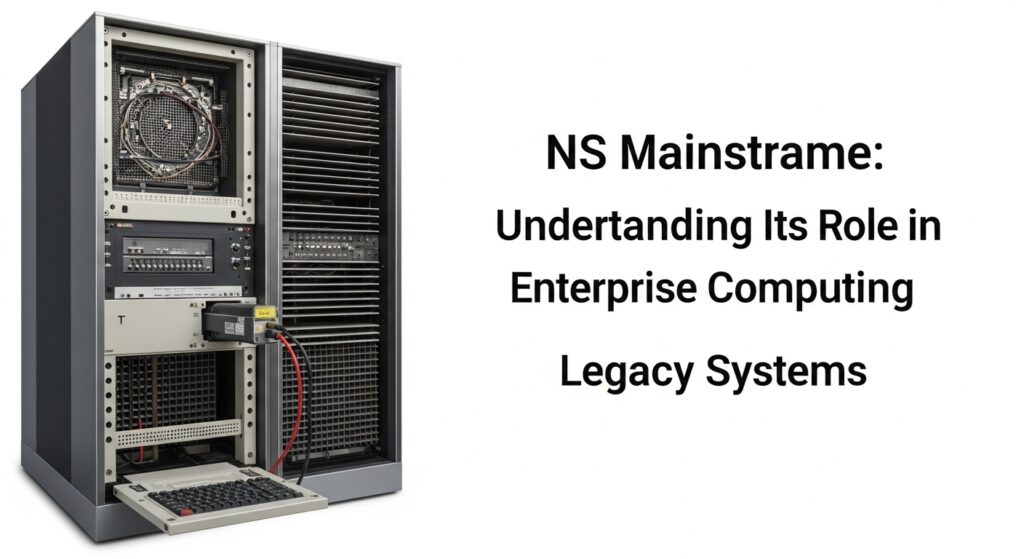
In the world of enterprise technology, mainframe systems have played a crucial role for decades. Despite the rise of cloud computing and distributed architectures, many large organizations still rely on mainframes to handle critical operations. One term that often appears in discussions around enterprise infrastructure is NS Mainframe.
While the meaning of NS Mainframe can vary depending on context, it generally refers to mainframe environments, systems, or frameworks used within organizations whose operations begin with or are associated with “NS,” such as internal system naming conventions, enterprise departments, or specific technological environments.
To better understand what NS Mainframe might represent, it is helpful to explore the broader concept of mainframe computing, how these systems work, and why they remain important in modern enterprise technology.
What Is a Mainframe?
A mainframe is a powerful computer system designed to process massive amounts of data and support thousands of users simultaneously. Unlike personal computers or small servers, mainframes are built for reliability, scalability, and security.
Organizations such as banks, government agencies, insurance companies, and large corporations use mainframes to run mission-critical applications.
Typical tasks handled by mainframes include:
- financial transaction processing
- large database management
- enterprise resource planning
- airline reservation systems
- government record management
These systems are designed to operate continuously with minimal downtime.
Understanding the Term “NS Mainframe”
The phrase NS Mainframe is often used within organizations as an internal reference to a specific mainframe environment, project, or infrastructure unit.
The “NS” portion may represent:
- a company or department abbreviation
- a specific network or system identifier
- a project name within enterprise IT infrastructure
- a classification used for certain mainframe operations
Many organizations use abbreviations to label system environments, such as development, testing, or production environments. In this sense, NS Mainframe could refer to a particular operational environment within a mainframe infrastructure.
Key Characteristics of Mainframe Systems
To understand how NS Mainframe environments function, it is useful to look at the characteristics that define mainframe computing.
High Reliability
Mainframes are built with redundancy and fault tolerance. Even if certain components fail, the system continues operating without major disruptions.
Massive Processing Power
These systems can process millions of transactions per second, making them ideal for industries that require constant data handling.
Scalability
Mainframes can support thousands of simultaneous users and applications.
Security
Enterprise mainframe systems include advanced security features to protect sensitive data and critical operations.
Long-Term Stability
Unlike many technologies that change frequently, mainframe systems are designed to remain stable for decades.
Industries That Use Mainframes
Many industries still depend heavily on mainframe technology. If NS Mainframe refers to an enterprise infrastructure system, it may support operations in one of the following sectors.
Banking and Finance
Banks use mainframes to process transactions, manage customer accounts, and ensure secure financial operations.
Government Services
Government agencies rely on mainframes to store citizen records, tax information, and public service data.
Insurance
Insurance companies manage policy data, claims processing, and customer records using mainframe systems.
Transportation
Airline reservation systems and railway scheduling platforms often run on mainframe technology.
Healthcare
Hospitals and healthcare networks use enterprise systems that require reliable and secure data processing.
Mainframe Architecture
A typical mainframe environment includes several components that work together to handle large-scale computing tasks.
Central Processing Units
Mainframe CPUs are optimized for high-volume transaction processing and multitasking.
Storage Systems
Mainframes use large-scale storage systems capable of managing enormous datasets.
Operating Systems
Specialized operating systems designed for mainframes manage system operations and resource allocation.
Middleware
Middleware software connects applications to databases and external systems.
Network Infrastructure
Mainframes integrate with enterprise networks, allowing communication between internal and external systems.
The Role of Mainframes in Modern IT
Despite the growth of cloud computing and distributed architectures, mainframes remain highly relevant in modern IT environments.
Many organizations choose to integrate mainframes with modern technologies rather than replacing them entirely.
For example, companies often connect mainframe systems to:
- cloud platforms
- mobile applications
- web services
- artificial intelligence tools
This hybrid approach allows businesses to keep the reliability of mainframes while taking advantage of new technological innovations.
Benefits of NS Mainframe Systems
If NS Mainframe represents a specific enterprise mainframe environment, it likely provides several key advantages.
Data Integrity
Mainframe systems ensure that critical data remains consistent and accurate across operations.
Continuous Availability
Downtime can be extremely costly for large organizations. Mainframes are designed to operate continuously.
High Transaction Capacity
Industries such as banking require systems that can process huge volumes of transactions every second.
Security Compliance
Mainframe systems often meet strict security and regulatory requirements.
Challenges Associated With Mainframes
Although mainframes are powerful and reliable, they also present certain challenges for modern organizations.
Legacy Technology
Some mainframe applications were built decades ago and may require modernization.
Limited Expertise
Mainframe programming languages and systems require specialized knowledge that fewer professionals possess today.
Integration Complexity
Connecting older systems with modern cloud services or web applications can require significant engineering effort.
Cost Considerations
Maintaining large enterprise systems can involve high operational costs.
Modernization Strategies
To address these challenges, many organizations are modernizing their mainframe environments while maintaining their core capabilities.
Common modernization strategies include:
- migrating certain applications to cloud environments
- modernizing legacy code
- integrating APIs for web services
- adopting hybrid computing architectures
These strategies allow companies to keep the reliability of their mainframes while improving flexibility and innovation.
The Future of Mainframe Computing
Mainframes continue to evolve alongside modern technology. New systems include advanced capabilities such as:
- built-in artificial intelligence acceleration
- enhanced cybersecurity protections
- improved cloud integration
- energy-efficient hardware designs
Rather than disappearing, mainframes are becoming part of hybrid infrastructures that combine traditional enterprise computing with modern digital technologies.
Conclusion
NS Mainframe represents a concept associated with enterprise mainframe environments, systems, or infrastructures used within large organizations. While the exact meaning may vary depending on the organization or technical context, it is closely related to the broader field of mainframe computing.
Mainframes remain essential for industries that require high reliability, massive transaction processing, and strict security standards. Even as technology evolves toward cloud computing and distributed systems, mainframes continue to serve as the backbone of many mission-critical operations.
Understanding the role of NS Mainframe systems highlights how legacy infrastructure and modern technology can coexist, ensuring that organizations maintain both stability and innovation in an increasingly digital world.