
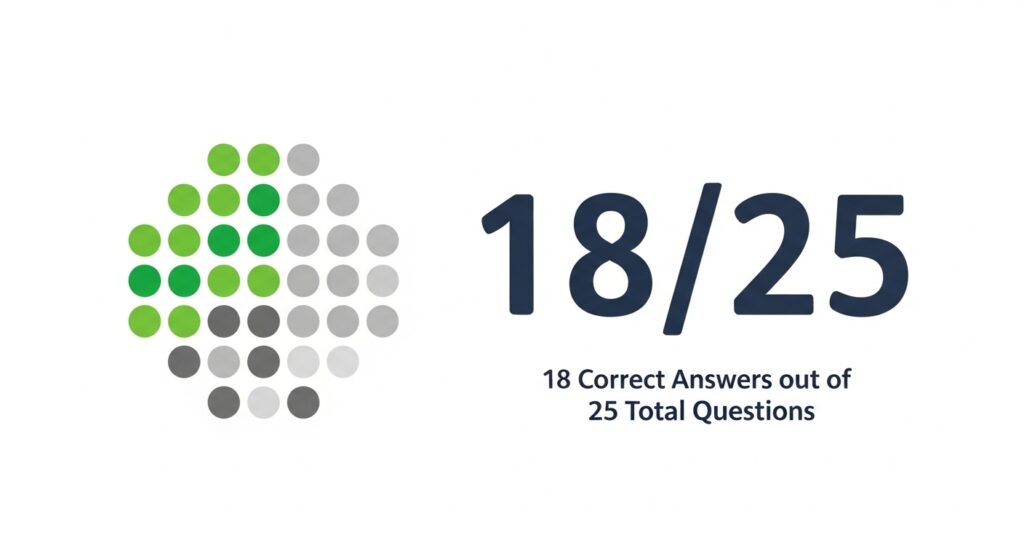
Scores and grades are commonly used to measure performance in exams, quizzes, assignments, and various assessments. One score that students and professionals often encounter is 18 out of 25. While it may look simple at first glance, understanding what 18 out of 25 represents in percentage form, grading systems, and performance evaluation can be helpful.
In this article, we will explore what 18 out of 25 means, how to convert it into a percentage, how it is interpreted in academic grading systems, and what it says about overall performance.
What Does 18 Out of 25 Mean?
The score 18 out of 25 indicates that a person has achieved 18 correct points out of a total possible 25 points. This type of score is commonly used in:
-
School quizzes
-
Exams and tests
-
Online assessments
-
Competitive exams
-
Practice tests
It simply reflects how many points were earned compared to the maximum available points.
Converting 18 Out of 25 to a Percentage
To understand the performance level more clearly, it is often useful to convert the score 18 out of 25 into a percentage.
Formula for Percentage
The formula to calculate the percentage is:
(Obtained Score ÷ Total Score) × 100
Now apply the numbers:
(18 ÷ 25) × 100 = 72%
So, 18 out of 25 equals 72%.
This percentage helps standardize the score and makes it easier to compare with other results.
What Grade Is 18 Out of 25?
Different schools and institutions use different grading systems, but generally 18 out of 25 (72%) falls within the average to good performance range.
Here is a common grading scale used in many institutions:
| Percentage | Grade |
|---|---|
| 90–100% | A |
| 80–89% | B |
| 70–79% | C |
| 60–69% | D |
| Below 60% | F |
Based on this scale, 18 out of twenty-five(72%) usually corresponds to a C grade or satisfactory performance.
However, grading standards can vary depending on the school, course difficulty, and evaluation method.
Interpreting 18 Out of 25 in Exams
A score of 18 out of twenty-fivecan be interpreted in several ways depending on the context.
Above Average Performance
In many cases, scoring above 70% indicates that the student understands most of the material. It shows that the learner has a solid grasp of the subject.
Room for Improvement
Although 72% is a respectable score, there is still space for improvement. Missing 7 points out of 25 suggests that some concepts may need further review.
Good Progress Indicator
If the test was difficult or used for practice, 18 out of 25 can be a positive indicator of learning progress.
Example Situations for 18 Out of 25
Let’s look at a few examples where the score 18 out of 25 might appear.
Classroom Quiz
A teacher gives a quiz worth 25 points. A student answers 18 questions correctly. The result becomes 18 out of 25, which equals 72%.
Online Practice Test
Many online learning platforms use short assessments. If a learner completes a test and scores 18 out of 25, it indicates that most answers were correct.
Competitive Exam Preparation
Students preparing for competitive exams often take practice tests. Scoring 18 out of 25 could help identify which topics require additional study.
How to Improve From 18 Out of 25
If someone scores 18 out of 25, there are several ways to improve future performance.
Review Mistakes
Analyzing incorrect answers helps identify weak areas. Understanding why mistakes happened can prevent them from happening again.
Practice Similar Questions
Practicing additional questions on the same topic can strengthen knowledge and improve accuracy.
Focus on Time Management
Sometimes mistakes occur due to rushing. Managing time effectively during tests can help reduce errors.
Ask for Feedback
Teachers or mentors can provide valuable insights into how answers could be improved.
Comparing 18 Out of 25 With Other Scores
To better understand the value of 18 out of 25, it helps to compare it with nearby scores.
| Score | Percentage |
|---|---|
| 15 out of 25 | 60% |
| 16 out of 25 | 64% |
| 17 out of 25 | 68% |
| 18 out of 25 | 72% |
| 19 out of 25 | 76% |
| 20 out of 25 | 80% |
This comparison shows that 18 out of twenty-five sits comfortably above the passing range but below the top performance levels.
Why Understanding Scores Matters
Understanding scores like 18 out of twenty-five is important because it helps students and professionals evaluate their progress.
Scores can help with:
-
Measuring knowledge and skills
-
Identifying areas that need improvement
-
Tracking academic progress
-
Setting realistic goals
When interpreted correctly, even a moderate score can become a valuable learning tool.
The Role of Assessments in Learning
Assessments are not just about grades. They also help teachers and learners understand how well the material has been learned.
A result such as 18 out of twenty-five provides feedback that can guide future study plans.
It helps answer important questions like:
-
Which topics are well understood?
-
Which areas need more practice?
-
How close is the student to mastering the material?
By using assessment results effectively, students can continuously improve their performance.
Conclusion
The score 18 out of 25 represents a solid performance that equals 72% when converted into a percentage. In many grading systems, this falls into the average to above-average range, showing that the learner understands most of the material but may still have room for improvement.
Whether in school exams, online tests, or practice assessments, understanding what 18 out of twenty-five means can help individuals evaluate their progress and focus on areas that need more attention.