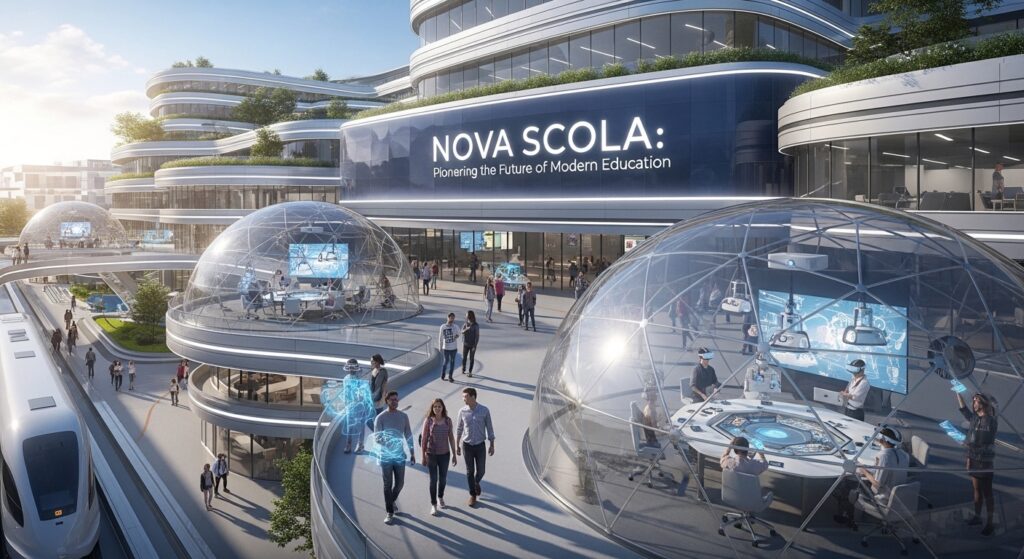
In today’s rapidly changing world, education is no longer just about rote learning or traditional classroom methods. Nova Scola has emerged as a forward-thinking educational initiative that seeks to redefine how students learn, engage, and prepare for the complexities of modern society. Combining technology, innovative pedagogy, and a focus on holistic development, Nova Scola represents a new paradigm in education, one that prioritizes critical thinking, creativity, and adaptability.
The Mission of Nova Scola
At its core, Nova Scola aims to provide education that is both relevant and engaging for today’s learners. Traditional schooling often focuses heavily on memorization and standardized testing. Nova Scola, in contrast, emphasizes experiential learning, problem-solving, and the development of life skills alongside academic knowledge.
The mission of Nova Scola is to prepare students not only for exams but for real-world challenges, equipping them with the ability to think independently, collaborate effectively, and adapt to new situations. By integrating these skills into everyday learning, the initiative seeks to cultivate well-rounded individuals capable of thriving in a complex, interconnected world.
Innovative Educational Approach
Nova Scola’s teaching methodology is grounded in several key principles:
1. Student-Centered Learning
Rather than a one-size-fits-all approach, Nova Scola tailors learning experiences to individual students’ needs, interests, and learning styles. This promotes engagement and ensures that students take ownership of their education.
2. Technology Integration
Digital tools play a central role in Nova Scola’s classrooms. From interactive learning platforms to virtual labs and simulations, technology enhances understanding, fosters creativity, and allows for personalized learning pathways.
3. Project-Based Learning
Students are encouraged to engage in projects that require critical thinking, research, collaboration, and problem-solving. This hands-on approach bridges theoretical knowledge with practical application, making learning meaningful and relevant.
4. Emphasis on Soft Skills
Communication, leadership, teamwork, and emotional intelligence are integrated into daily activities. Nova Scola recognizes that success in life often depends on skills that extend beyond textbooks.
Curriculum Highlights
Nova Scola’s curriculum blends traditional subjects with innovative disciplines, reflecting a holistic vision of education:
-
STEM Education: Science, technology, engineering, and mathematics are taught in engaging, real-world contexts.
-
Arts and Humanities: Creativity, cultural awareness, and critical thinking are nurtured through literature, music, visual arts, and social studies.
-
Global Citizenship: Students learn about sustainability, ethics, and global challenges, fostering awareness and responsibility.
-
Life Skills: Financial literacy, digital literacy, and personal development modules prepare students for independent life.
By balancing academic rigor with creative exploration and practical skills, Nova Scola ensures that students are equipped for both higher education and life beyond the classroom.
Personalized Learning and Assessment
One of the hallmarks of Nova Scola is its focus on personalized learning and assessment. Traditional grading systems often fail to capture a student’s full potential. Nova Scola, instead, employs formative assessments, portfolio evaluations, and reflective exercises that highlight growth, effort, and mastery over mere memorization.
This approach encourages intrinsic motivation, helping students develop a love for learning rather than pursuing achievement solely for external validation.
The Role of Teachers
In Nova Scola, teachers are more than knowledge transmitters; they are facilitators, mentors, and guides. Educators work closely with students to identify strengths, address weaknesses, and cultivate curiosity. Professional development for teachers is also emphasized, ensuring they are equipped with the latest pedagogical strategies, technological tools, and classroom management techniques.
Technology and Innovation in Practice
Nova Scola leverages technology to create interactive and immersive learning experiences. Examples include:
-
Virtual Laboratories: Allowing students to conduct experiments safely and explore complex scientific concepts.
-
Gamified Learning Platforms: Making education engaging and rewarding through interactive challenges and quizzes.
-
Online Collaboration Tools: Enabling students to work together on projects, even across distances.
-
Data-Driven Insights: Personalized analytics help teachers track progress and adjust instruction accordingly.
These innovations transform traditional learning into dynamic experiences that prepare students for the digital age.
Community and Parental Engagement
Nova Scola recognizes that education is a collaborative effort. Parents and the wider community are actively involved in supporting student development. Workshops, seminars, and interactive sessions allow families to engage with learning processes, provide feedback, and reinforce the values taught in school.
Community partnerships also enhance learning by connecting students with real-world experiences, internships, and mentorship opportunities.
Preparing Students for the Future
The skills emphasized by Nova Scola—critical thinking, collaboration, creativity, and adaptability—align closely with the demands of the 21st-century workforce. By fostering lifelong learning habits, the platform ensures that students are prepared to navigate uncertainty, innovate, and contribute meaningfully to society.
Graduates of Nova Scola are not just academically competent; they are confident, socially aware, and equipped to take on leadership roles in various fields.
Addressing Global Challenges
In addition to academic excellence, Nova Scola emphasizes sustainability and social responsibility. Students engage in projects that address global challenges, such as climate change, social inequality, and technological ethics. This not only cultivates empathy and awareness but also encourages students to become proactive contributors to positive change.
The Impact on Modern Education
Nova Scola exemplifies a shift in education from passive learning to active engagement. Its holistic, student-centered, and technologically integrated approach is increasingly seen as a model for modern schools worldwide. By balancing knowledge acquisition with skill development and personal growth, it addresses the limitations of traditional education systems.
Future Prospects
As education continues to evolve, Nova Scola has the potential to influence both national and international pedagogical practices. Expansion into online platforms, international collaborations, and research-based innovations could further strengthen its impact.
The growing emphasis on adaptability, creativity, and emotional intelligence in global education aligns with Nova Scola’s philosophy, making it a relevant and forward-looking initiative.
Conclusion
Nova Scola represents more than a school; it is a vision for modern education. By combining innovative teaching methods, technology integration, and holistic development, it prepares students to excel academically and thrive in a complex, rapidly changing world.
Through personalized learning, project-based activities, and a focus on essential life skills, Nova Scola ensures that students are not only knowledgeable but also capable, confident, and socially responsible. As education continues to adapt to contemporary challenges, Nova Scola stands out as a pioneering example of how schools can cultivate the next generation of thinkers, innovators, and leaders.
In embracing a forward-thinking philosophy, Nova Scola demonstrates that education is not just about exams or grades—it is about empowering students to explore, create, and succeed in life.